Posts

Froggy's Deli Jigging

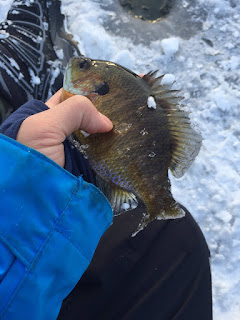
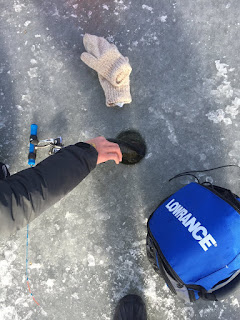
The frigid temperatures that swept into Westchester County this past week gave way to the start of a fruitful ice fishing season. Up to five inches of ice was found on one of our favorite spots. Off route 100 in Somers, a sizeable branch of the Muscoot Reservoir can be found. Our day on the ice started as the sun sailed into midday. It had warmed up, slightly to the mid 20’s, but hand warmers were still warranted. The morning before, we endured a coating of snow, giving the reservoir a magical twinkle or shine. The gear I employed on this day was a 13 Fishing White Noise Ice Fishing Rod paired to a 2000 size Shimano Sienna Reel. They held up beautifully despite the glacial temperatures. Our first operation was to drill holes. Around 250m off the bank of the reservoir, we began drilling holes. We tried to align ourselves parallel to distinct points off the bank. Unlike the average auger, the one we were using drilled smaller holes; perfect for panfish and other species. As a result, we...

Weedline Perch

Image
"Skyscraper"perch, is a term that describes abnormally tall perch. On a recent early-ice fishing trip, we stumbled into large perch while targeting bluegill and crappie on the edge of a weedline. The transition from shallow weedy flats to a deeper basin is one of the best places to ice fish throughout the ice fishing season. Fish are drawn to this type of structure because it provides them easy access to forage - the basin, which contains bloodworms and numerous aquatic insects. Furthermore, weeds provide fish an opportunity to quickly escape from pursuing predators. It is very difficult to locate a break from weeds to basin, so patience, the grace of God, and certain ice fishing electronic tools are required to locate these fish hotspots. First, drill holes every 10 feet away from shore after locating water 10 feet deep. Next, use a fish finder or underwater camera to find this transition. It is difficult to find this transition without the use of electronics(however, it...

HT Enterprises Ice Blue Rod

Image
HT Enterprises Ice Blue Rod With ice fishing season around the corner, it's about that time to order new gear. A piece of equipment that I added to my arsenal this year was the Ice Blue Rod. I mainly bought this rod to test its capabilities - it is a sub $10 rod. Apart from the rod's horrendous color scheme of blue and white, the orange tip does serve a practical purpose in bite detection, the rod seems to be very limber - an aspect of a good panfishing rod. The guides of the rod, on first inspection, are fairly small, which can make the rod susceptible to being 'frozen' in frigid temperatures - this issue, however, is common on most ice rods, and can be easily solved by breathing on the guide or tip-top. The fifth guide from the top features a snake guide, which is common on fly fishing rods. The rod that I picked up is the 24'' UL rod; I expect that I will be using it for hole hopping purposes for ice fishing. It can fish very small tungsten jigs with ea...

"Safety is Number One Priority"

Early Ice - Ice Fishing Safety As the ice begins to form, anglers across the country often prepare their equipment and set their expectation of when they will be able to go fishing far before the ice is even remotely safe, in this way, they not only risk loosing a equipment, but also risk loosing something that is far more valuable - their life. Here are some of the necessary equipment for early ice safety: An ice spud - using an ice spud to test ice thickness is important to staying out of the water during early ice. Basic ice spuds can be bought for under $50, and are very important for all levels of ice anglers. Furthermore, they replace the need for hefting a large auger during the early season, for they are efficient hole makers, when the ice is under five inches thick. It is important to note that ice conditions can change drastically depending on where in the lake you are located, as well as weather conditions while you are fishing. ( https://www.fishusa.com/produc...

Shallow Water Bluegill Setup

Image
Shallow Water Bluegill Ice Fishing As the ice starts to form on the bigger lakes and reservoirs of the Southern New York region, I am preparing my gear for the iced-over smaller lakes and ponds, which I know freeze over first. My beginning of the year spot, "King Lumber" on Muscoot Reservoir, freezes as soon as the temperature drops below 20 degrees at night for a week. "King Lumber", as anglers affectionately refer to the less than five acre cove, holds an early season ice bite, with plentiful bluegill, crappie, and perch. Most of the fishing at "King Lumber" is over shallow water weed-beds, and the rare 20ft sections that resemble the larger basins of larger lakes- "King Lumber" is a microcosm that resembles a larger lake. During the early season, when pursuing bluegills in this over-pressured location, it is paramount that you develop a presentation that is unique from the countless other presentations that these fish have become accu...

Round Valley Lakers

Image
11/26/2017 A warm day at the end of fall just beckons for an attempt, on the 13' Hobie Outback kayak, at lake trout. Although this was just my second time lake trout fishing on Round Valley Reservoir, I ended up catching two beautiful specimens. The date of this fishing excursion was 11/25/2017 I started the day off by stopping at the local bait shop: Behre bait and tackle. Although they were not well stocked because it was the end of the open water season, Behre had medium and large shiner minnows, as well as the necessary assortment of lures that I needed: a bladebait and a Krocodile spoon. I purchased a dozen medium shiners, a Thinfisher bladebait, and a Krocodile spoon. In my previous trip to Round Valley, I had fished the North Dam and North Tower of the Reservoir with only a bite and a foul hooked rock bass to show for it - given that this was only a one hour excursion, I deemed it very successful, so this time we launched out of the Southern launch site, and I fished t...

Thoughts on Conservation and Harvesting the Fish we Catch

The amount of fishing that goes on in this world is unprecedented due to the aggressive increase in human population. A report by the World Wildlife Fund in 2015 found that nearly half the marine life was lost in the last 40 years. Our impact on the world's wildlife population is both depressing and urgent. We must radically change the way we conduct the business of harvesting fish recreationally. In my opinion, if an individual is not relying on fishing to put food on their table, one should not be harvesting fish from the ocean recreationally. We cannot rationalize our decisions. We can't say that one fish won't make a difference because that is the same exact thinking that got into this situation. What I can only hope from my fellow anglers is to reconsider if they really need to eat the fish they caught, or if they could release it back into the waters in which it belongs. Think of your refrigerator and pantry at home, does it have enough food for you to eat, or do you...